






































Many people learn how to clean a chandelier the hard way: they mist glass cleaner over the whole fixture and let it drip. The spray does not stay on the crystal. It runs onto the plated hooks, the metal finish and the bulb sockets, and that is where the damage starts.
Leaving the dust is not harmless either: the National Park Service's conservation guidance notes that dust is abrasive and can scratch glass. And a modern chandelier mixes materials, from crystal on a gold frame to opal glass on brass, acrylic blades and LED modules, each needing a different method.
This guide gives the method for each part: crystal in place or by hand, glass globes and bubbles, brass and gold-plated finishes, and the electrics. It then covers high ceilings, how often to clean, and the mistakes that cause most of the damage.
How to clean a chandelier: what to use on each part
Turn the power off at the breaker, dust from the top down, then clean by material: a damp cloth on crystal and glass, a dry cloth on metal.
Clean in place for routine care, or take crystals or globes off for a heavy film or the yearly deep clean. Only removable decorative parts, such as crystals, glass globes and shades, are ever washed. On the fixture itself, liquid goes on a wrung-out cloth, never onto the fixture, and the sockets, wiring, canopy and LED modules stay dry.
Use this table to match the method to each material on your fixture.
| Part or material | Routine care | Deeper clean | Avoid |
|---|---|---|---|
| Crystal, including K9 crystal (DRIBBLE, CRYSTAL ROCK) | Soft duster or brush, top down | Wipe in place with a wrung-out cloth, or wash removed crystals in mild soapy water and rinse in distilled water | Any spray on the fixture; scrubbing cloudy crystal |
| Clear, opal and frosted glass globes and bubbles (ORBELLA, LUNARA, NORDEN) | Dry microfiber cloth | Removable: hand-wash off the fixture, rinse, dry fully. Fixed: barely damp cloth on the glass only | Abrasive pads; refitting globes while wet |
| Acrylic blades (ZEPHYR) | Soft, dry cloth | Alcohol on a soft cloth for water marks, as the care note allows | Rough cloths, which scratch acrylic |
| Finished brass and brushed gold on solid brass (ORBELLA, LUNARA) | Dry cloth | Spot-clean marks with a cloth barely dampened with water, away from sockets and wiring; dry at once | Soap or cleaners on the frame; metal polish; abrasives |
| Gold-plated, electroplated or painted metal (RAIN DROPS, ZEPHYR) | Dry cloth or soft brush | Spot-clean marks with a cloth barely dampened with water; dry at once | Polish; abrasives; soaking |
| Raw, unlacquered brass (mostly vintage pieces) | Dry cloth | Brass polish on the metal only, with crystal and glass removed or covered | Polish near any coated finish |
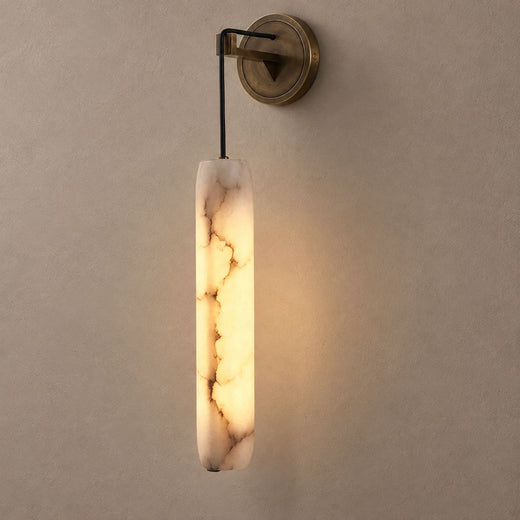
| Alabaster and stone shades (ALABASTER, MOONSHADE) | Soft, dry brush or cloth | Dry only: there is no wet clean for alabaster | Any liquid, spray or damp cloth |
| Sockets, bulbs, LED modules and drivers | Power off, let cool, then a dry cloth or soft brush | Never wet | Any liquid; spraying the fixture body |
Where two materials touch, such as crystal hung from a gold frame, clean both to the gentler rule.

First, the preparation that protects you, the finish and the warranty.
What do you need before you clean a chandelier?
You need the power off at the breaker, cool bulbs, a stable ladder or platform, soft cloths and brushes, a drop cloth, distilled water and mild dish soap.
Gather everything first, and read the fixture's care note before anything else: it can rule out a method entirely.
Safety first
Turn the power off at the breaker, not just the wall switch, let the bulbs cool, and never spin or pull the chandelier; move around it instead.
- Photograph the chandelier from every side first; the photos are your map for reassembly.
- Lay a thick blanket or drop cloth underneath to catch drips and anything that slips.
- Do not hang tools or bags on the arms, and never use the chandelier for support.
- If anything will be unwired or taken down, turn the power off at the breaker and follow the fixture's own instructions; a licensed electrician is strongly recommended for all hardwired installations.
The supplies list
A good kit is gentle: soft cloths and brushes, distilled water, a mild soap, socket covers and a padded place to set parts down.
- Two or more lint-free microfiber cloths, one damp and one dry
- Soft brushes, such as a clean artist's or makeup brush, for crevices and cut facets
- A lambswool or microfiber duster, plus an extendable pole duster for a high ceiling
- Distilled water, which dries without the mineral spots tap water can leave
- Mild, clear dish soap without dyes or perfumes for washing removable parts, and 70% isopropyl alcohol if you use the alcohol mix
- A spray bottle, for dampening the cloth, not the fixture
- Small plastic bags and painter's tape to cover sockets
- A towel-lined plastic tub for removed crystals and globes
- Vinyl or nitrile gloves for washing, plus soft cotton gloves if you like them for handling dry crystal
- Optional: a vacuum with a soft brush and adjustable suction (the National Park Service prefers a HEPA filter)
Check the care note and the warranty first
The fixture's own care note overrides any general method, and the maker's warranty tells you which kinds of cleaning damage it will not cover.
Zenduce prints short care notes on many of its product pages:
- The JADORE page says: "Gently wipe clean with a soft, dry cloth. Do not use polishes or cleaners, as they could damage the finish."
- Other Zenduce product pages say to turn off the power and wipe clean with a dry cloth.
- The ZEPHYR page warns that its acrylic blades scratch easily during installation, and says water marks left from manufacturing can be wiped off with alcohol on a soft cloth.
Read the warranty the same way. Zenduce's warranty is a 2-year limited warranty against manufacturing defects, including failed factory-installed LEDs and finish defects not caused by external factors. It does not cover cosmetic damage caused by water ingress, cleaning agents or physical impact after delivery.
Know your light source, too, because it varies across Zenduce's chandeliers. Replaceable bulbs, such as DRIBBLE's G9 LED bulbs, can come out or have their sockets bagged. An integrated LED fixture, such as CRYSTAL ROCK, has its LEDs built in, so dust the LED parts dry and never spray or wet them.
If you are still choosing a fixture, read the care note alongside the materials and the warranty, the checks covered in this guide on how to choose a chandelier.
With the prep done, start with the material most people are here for: crystal.
How do I clean a crystal chandelier?
Dust a crystal chandelier from the top down, then damp-wipe each crystal in place, or remove them, wash in mild soapy water and rinse in distilled water.
How to clean a chandelier with crystals comes down to one choice: leave them on or take them off. Wiping them in place is the easiest way and suits most cleans. Take them off for a greasy film, such as on a chandelier over a kitchen island, or for the yearly deep clean.
The National Park Service's guidance on removing dust from glass puts it plainly: "Always work on an object from the highest point down." That way, dust falls onto parts you have not cleaned yet, not onto finished ones.
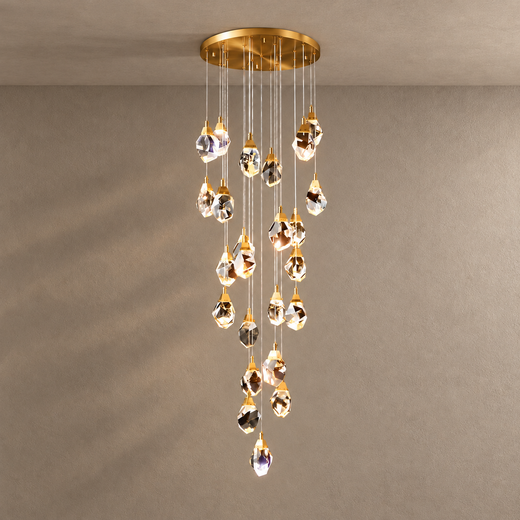
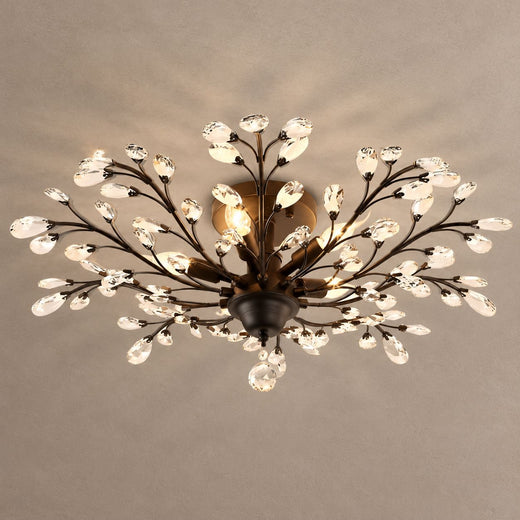
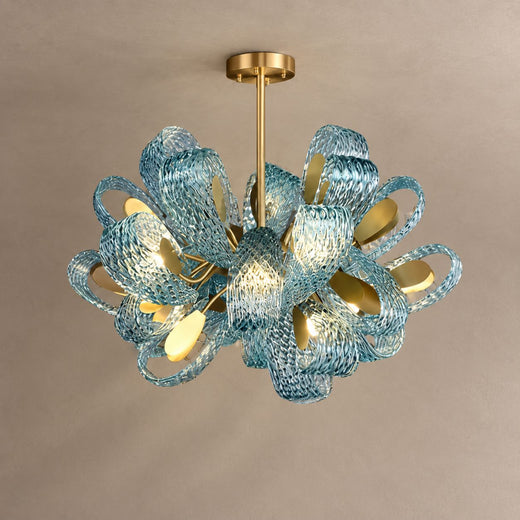
Knowing how to clean chandelier crystals is only half the job, because the frame matters just as much. Among Zenduce's crystal chandeliers, DRIBBLE hangs K9 crystal from an aluminum frame, CRYSTAL ROCK pairs K9 crystal with copper and stainless steel, and RAIN DROPS sets crystal droplets in electroplated gold housings.
How to clean a crystal chandelier without taking it down
Leave the crystals hanging, dust from the top down, then wipe each crystal with a cloth dampened in a mild cleaning mix and dry it straight away.
The steps below show how to clean crystal chandelier drops in place:
- Turn the power off at the breaker and let the bulbs cool.
- On a fixture with bulbs, remove them or cover each socket with a small plastic bag and painter's tape. On an integrated LED fixture, keep liquid away from the LED modules entirely and wipe only.
- Lay a drop cloth or thick blanket underneath.
- Dust from the top down with a soft duster or brush. For heavy dust, brush it toward a vacuum nozzle held about an inch from the surface, with the suction turned down, as the National Park Service describes.
- Mix distilled water with a drop of mild dish soap. A common alternative is 1 part 70% isopropyl alcohol to 3 parts distilled water, which dries faster. Dampen the cloth, never the chandelier, and wring it out well.
- Pinch each crystal between the damp cloth and a dry one and wipe both faces, keeping the cloth off the arms, sockets and canopy. Turn the cloths to a clean section often.
- Wipe the frame and hooks with a dry cloth, as described below.
- Let everything dry fully, remove the socket covers, then restore power.
Skip no-wipe drip sprays. They work by soaking the whole fixture and letting it drip, which sends liquid onto the sockets, wiring and finish.
How do you clean chandelier crystals by hand?
Photograph the layout, unhook one strand at a time, wash each crystal in warm water with a drop of mild soap, rinse in distilled water and towel-dry.
Washing is only for parts that come off, and these steps show how to clean crystals from a chandelier once they are unhooked:
- Photograph how each strand connects to the frame and its neighbors; on a complex piece, number the main strands on a printed photo.
- Set up a padded table and a towel-lined plastic tub, not a hard sink.
- Fill one bowl with warm water and a drop of mild soap, and a second bowl with distilled water for rinsing.
- Wash one crystal at a time with your fingers or a soft cloth, swish it in the rinse bowl, and dry it with a lint-free cloth. Leave it on a towel until completely dry.
- Check each hook or pin as you go, and replace any that are bent before rehanging.
- Rehang the strands from your photos.
Choose gloves for the job. Soft cotton gloves keep fingerprints off dry crystal when you handle or rehang it, but they slip on wet glass. When cleaning crystal chandelier drops in water, switch to vinyl or nitrile: the National Park Service recommends clean, dry hands or vinyl gloves for handling glass, and keeps white cotton gloves for unglazed ceramics.
If cleaning would mean taking the whole chandelier down, that is installation work, not cleaning: DRIBBLE weighs 20 to 42 lb depending on size, and ARCTIC 35.2 to 152 lb. A licensed electrician is strongly recommended for all hardwired installations.
Cleaning the frame, hooks and canopy
Wipe the metal with a soft, dry cloth and a soft brush in crevices; for a stubborn mark, use a cloth barely dampened with water and dry it at once.
Keep soap and the alcohol mix on the crystal, not the metal. Check that every hook and pin is closed before you finish. The canopy, the cover plate against the ceiling, hides the wiring: wipe its outside only, and never open it to clean.
Glass globes and bubble clusters look simpler than crystal, but they hold water and sit closer to the bulbs.
How to clean glass chandelier globes and bubbles
Take off globes that unscrew, wash them in warm soapy water, rinse and dry them fully; wipe fixed globes and bubble clusters in place with a damp cloth.
Drying is the step that matters most: a globe refitted while wet traps moisture right next to the socket.
How to clean chandelier globes that come off
Turn the power off, let the bulbs cool, then remove the globes and wash them by hand in a towel-lined plastic tub, never in the dishwasher.
- Use warm, not hot, water with a drop of mild soap.
- Clean the outside with a soft cloth and the inside with a soft bottle brush.
- Rinse in distilled water.
- Dry inside and out, then leave the globes upside down on a towel until completely dry before refitting. The sockets and fixture body stay dry throughout.
ORBELLA and LUNARA show why: their opal globes sit on solid brass with a brushed gold finish, and washing the globes off the frame keeps water away from it.
How to clean a glass bubble chandelier
Dust with a soft brush, then wipe the glass with a barely damp cloth, keeping liquid away from the bulb openings, and dry each bubble as you go.
NORDEN, for example, carries clear glass bubble shades on a wood-finish resin frame, and ASTREVA sets glass orbs around an iron frame. Fixtures like these show how to clean bubble chandelier glass safely: one bubble at a time, so no water sits on the frame. Frosted and opal glass need a soft cloth only, because abrasive pads leave marks.
Zenduce's bubble chandeliers mix clear and opal glass on brass, gold and black frames, so check yours before you start.
The metal holding the glass needs the gentlest touch of all.
How do you clean a brass or gold-plated chandelier?
Treat a brass or gold chandelier as coated unless you know otherwise: dust with a dry cloth, spot-clean marks with a barely damp cloth, dry at once and never polish.
The wrong product can remove a finish for good, and Zenduce's warranty does not cover cosmetic damage from cleaning agents.
How to clean a brass chandelier
First work out whether the brass is finished or raw, because the method differs; then dust it, spot-clean marks with a barely damp cloth if needed, and dry it.
For anyone working out how to clean brass chandelier arms, the finish decides the method. Treat any named finish, such as brushed gold, polished or satin, as coated; ORBELLA and LUNARA, for example, are solid brass with a brushed gold finish. Raw, unlacquered brass is usually vintage, and it darkens and spots unevenly over time.
A magnet shows what is under the finish. It will not stick to solid brass, so if it does stick, the frame is iron or steel under a plated or painted finish. It will not stick to aluminum either, so no pull does not prove brass: DRIBBLE's gold finish sits on an aluminum frame.
How do you polish a brass chandelier?
Polish only raw, unlacquered brass, with the power off and the crystal or glass removed or covered, using a little brass polish on a soft cloth.
Here is how to polish brass chandelier arms safely:
- Test on a hidden spot first, such as the back of an arm near the canopy.
- Work one small area at a time.
- Buff with a clean, dry cloth.
- Keep polish off crystal, glass and anything electrical.
Never polish a coated or plated finish; the damage is permanent.
How do you clean a gold-plated chandelier?
Plating is a thin layer of metal over another metal, so dust it with a soft cloth or brush, use a barely damp cloth only for grime, and dry it.
RAIN DROPS, made of electroplated iron with an electroplated gold finish, belongs in this group, and so does CRYSTAL ROCK, whose metalwork is electroplated and polished. Painted finishes, such as ZEPHYR's, take the same gentle approach. Knowing how to clean gold plated chandelier parts is mostly knowing what to skip: polish, abrasives, ammonia, vinegar and soaking.
All of this assumes you can reach the fixture. On a high ceiling, that is the hard part.
How to clean a chandelier on a high ceiling
Dust it from the floor with an extendable duster; for a wet clean, use a stable platform or hire a professional, and never overreach from a ladder.
When people ask how to clean chandeliers on high ceilings, the real question is access. Over a stairwell or in a double-height entry, the bigger risk is the climb, not the crystal.
Can you clean a chandelier without a ladder?
Yes, for routine dusting: use a lambswool or microfiber duster on a telescoping pole from the floor. A proper wipe or wash still needs safe access.
Use light strokes, top down, with the power off.
Ladder rules that matter
Set the ladder on a stable, level surface, keep three points of contact, stay off the top step and keep your weight centered between the rails.
These rules come from OSHA's ladder safety guidance, including its Portable Ladder Safety QuickCard. Three-point contact means two hands and a foot, or two feet and a hand, on the ladder while you climb. OSHA also says not to exceed the ladder's load rating, counting your tools, and not to move a ladder while you are on it.
For a chandelier, move the ladder around the fixture instead of reaching across it or turning the chandelier, and never lean on the chandelier or hold it for balance. A ladder on a staircase is not on a stable, level surface, so stairwell fixtures belong in the next group.
When to use a platform, a lift or a professional
For stairwells, double-height entries and heavy fixtures, a rented platform tower, a chandelier lift or a professional cleaner is usually safer than a ladder.
Weight is part of the decision. CRYSTAL ROCK (GRAND) runs from 9 lb in its 3-light version to 205 lb with 60 lights. The JADORE page notes that chandeliers weighing more than 50 lbs cannot be mounted alone to a standard outlet box and need extra bracing above the ceiling. Taking a fixture like that down to clean it is installation work, and a licensed electrician is strongly recommended for all hardwired installations.
If you are planning a large chandelier for a high ceiling, ask about a motorized chandelier lift. It is fitted above the ceiling at installation and brings the fixture down to a reachable height for cleaning.
How often any of this needs doing depends on the room.
How often should you clean a chandelier?
Dust a chandelier every two to three months and deep clean it about once a year, more often in homes with forced-air heating or near the coast.
Those intervals come from Southern Living's chandelier cleaning guide, which treats a yearly deep clean as a good rule of thumb. Greg Kowles, a restorer at New Orleans Auction Galleries, told the magazine that homes with forced air and heat collect dust faster, and homes near salt water can see metal tarnish faster.
Use this schedule as a starting point and adjust it to the room.
| Task | How often | Do it more often if |
|---|---|---|
| Dust, top down | Every two to three months | Forced-air heating or renovation dust |
| Wipe crystal and glass in place | When dusting no longer brings the sparkle back | It hangs over a kitchen island or near a cooktop |
| Deep clean, crystals or globes off | About once a year | Coastal homes, where metal tarnishes faster |
While you clean, look over the hooks, bulbs and canopy. If the light flickers, or the canopy, an arm or any other part feels loose, more cleaning will not fix it: stop using the chandelier, turn it off at the breaker and arrange an inspection by a licensed electrician.
When you replace a bulb, use the bulb type and maximum wattage the fixture lists. Zenduce's warranty excludes damage caused by incompatible bulbs.
What chandelier cleaning mistakes should you avoid?
The costly mistakes are spinning the fixture, spraying cleaner into sockets or LEDs, using polish or ammonia on plated finishes, and overreaching from a ladder.
- Spinning or twisting the chandelier. Move yourself or the ladder instead.
- Spraying anything onto the fixture, or wetting the canopy, sockets, wiring or LED modules. Water ingress is excluded from Zenduce's warranty.
- Ammonia glass cleaner, vinegar or metal polish on plated, painted or coated finishes. They can damage the finish.
- Cotton gloves on wet crystal. They slip; save them for handling dry crystal.
- Restoring power too soon. Wait until everything is completely dry.
- Standing on the top step or leaning out from the ladder. OSHA advises against both.
- Cleaning around a fault. Flicker or loose parts mean stop using the chandelier and arrange an inspection.
The short version
Turn the power off, dust from the top down, and put liquid only on a cloth for crystal and glass, or on parts you have taken off to wash.
Keep metal and electrics dry, plan safe access for a high ceiling, read the fixture's care note first, and stop and call an electrician if the light flickers or anything is loose.
Frequently Asked Questions
Quick answers to the other questions people ask about how to clean a chandelier, from glass cleaner and vinegar to gloves and dishwashers.
Can you use glass cleaner on a crystal chandelier?
Do not spray it onto a chandelier. The overspray reaches the hooks, frame, finish and sockets, and Zenduce's warranty does not cover cosmetic damage from cleaning agents. Wipe the crystals instead with a wrung-out cloth dampened in mild soapy water or a mix of isopropyl alcohol and distilled water.
Can you clean a crystal chandelier with vinegar?
Vinegar is acidic, so keep it away from the metal. Drips run from the crystals onto plated hooks and frames, and the JADORE care note warns against using cleaners on the finish. For crystal, a wrung-out cloth with mild dish soap in distilled water is gentler, and only removed crystals should ever be washed.
Do no-wipe chandelier sprays work?
They can loosen light dust, but they work by soaking the whole fixture and letting it drip, so liquid reaches the sockets, wiring, canopy and finish. That is the opposite of keeping the electrics dry. Dust the chandelier, then wipe crystal and glass with a wrung-out cloth, or wash parts you have taken off.
How do you clean a crystal chandelier with a gold frame?
Dust the whole chandelier, then wipe each crystal with a wrung-out cloth, keeping it off the gold frame. Give the frame a dry cloth, or a cloth barely dampened with water for a stubborn mark. Never spray the fixture or polish the frame: plated and painted gold scratches and strips easily.
Why do my chandelier crystals still look cloudy after cleaning?
First rule out residue: rinse in distilled water and dry with a lint-free cloth. If the haze stays, it may be in the glass itself. The National Park Service explains that clouding can come from chemical leaching rather than a deposit, so scrubbing will not clear it and can damage the surface.
Should you wear gloves to clean a chandelier?
It depends on the step. For washing, vinyl or nitrile gloves grip wet glass best, and the National Park Service recommends clean, dry hands or vinyl gloves for handling glass. Soft cotton gloves are fine for handling or rehanging dry crystal, where their job is to keep fingerprints off.
Can chandelier crystals or glass globes go in the dishwasher?
Wash them by hand instead. In a dishwasher, the rack and the spray can knock pieces together, and Zenduce's warranty does not cover physical impact after delivery. A towel-lined plastic tub with warm, mildly soapy water, followed by a distilled-water rinse and a full dry, is safer for crystal and globes.
Is isopropyl alcohol safe on a brass or gold chandelier frame?
Keep the alcohol mix on crystal and glass. Wipe metal with a dry cloth, as Zenduce's care notes advise, and use a cloth barely dampened with water only for a stubborn mark, drying it at once. Acrylic is a separate case: the ZEPHYR care note allows alcohol on a soft cloth for its acrylic blades.


Leave a comment
This site is protected by hCaptcha and the hCaptcha Privacy Policy and Terms of Service apply.